The rise of AI - friend or foe? A time to rethink traditional degree choices
Posted on 13th Apr 2026 in Technology
"Anxiety", a popular song on TikTok sings: "Anxiety, keep on tryin' me, I feel it quietly...can't shake it off of me, Somebody's watchin' me".
Unfortunately, many students can feel the anxiety creeping up on them as they choose both their university as well as their course - fuelled both by parental expectations and future career possibilities in the face of the AI boom. With authorities such as the World Economic Forum forecasting how AI will displace 92 million existing jobs by 2030 - it's no wonder many students struggle and sometimes decide on university courses not based on personal interest, but out of fear.
While AI tools may perform tasks such as data analysis and coding with greater efficiency, interpersonal skills and hands-on expertise that are essential in leadership roles and people-facing work remain impossible to replicate. More importantly, disruptions caused by AI give us an opportunity to utilize, showcase and further harness our creative thinking, problem solving skills and test our resilience, flexibility and leadership capabilities - skills essential to navigating uncertainty.
Instead of pondering whether - "What if I spend years studying for a job that gets wiped out before I even graduate?"...
We should ask ourselves, "which university program helps develop skills that continue to grow in value, no matter how industries evolve?" Hospitality business education is one context in which these skills are deliberately cultivated, alongside liberal arts, design thinking, and experiential business programs.
The power of the human touch: empathy is the new currency
Think about the last time a hotel concierge managed a holiday crisis for you, going above and beyond to ensure that every concern was attended to before you vocalized it. Having a skilled individual who can read the room and anticipate your needs before you voice them is the skill gap AI can't close. The ability to read a room and respond with sincerity and genuine care sets a crisis solution apart from another that relies solely on standard operating procedures.
Harnessing empathy, cultural intelligence and one's ability to read and anticipate people elevates interactions from purely transactional to meaningful, collaborative professional relationships. Networking becomes genuine, and success delivers mutual benefit, from boardroom negotiations to high-stake investment pitches. And here is where EHL's Bachelor in International Hospitality Management's holistic approach shines.
Rather than just soft skills, students learn competencies such as service theory, and apply them in real life environments in actual businesses - handling client interactions, complex stakeholder dynamics and leading multicultural teams through high-pressure scenarios - such experiences serve as valuable training ground for developing astute judgment critical across start-ups, management roles and in crisis response. They recognize that networking isn't about collecting business cards but building genuine connections that journey with you through your career.
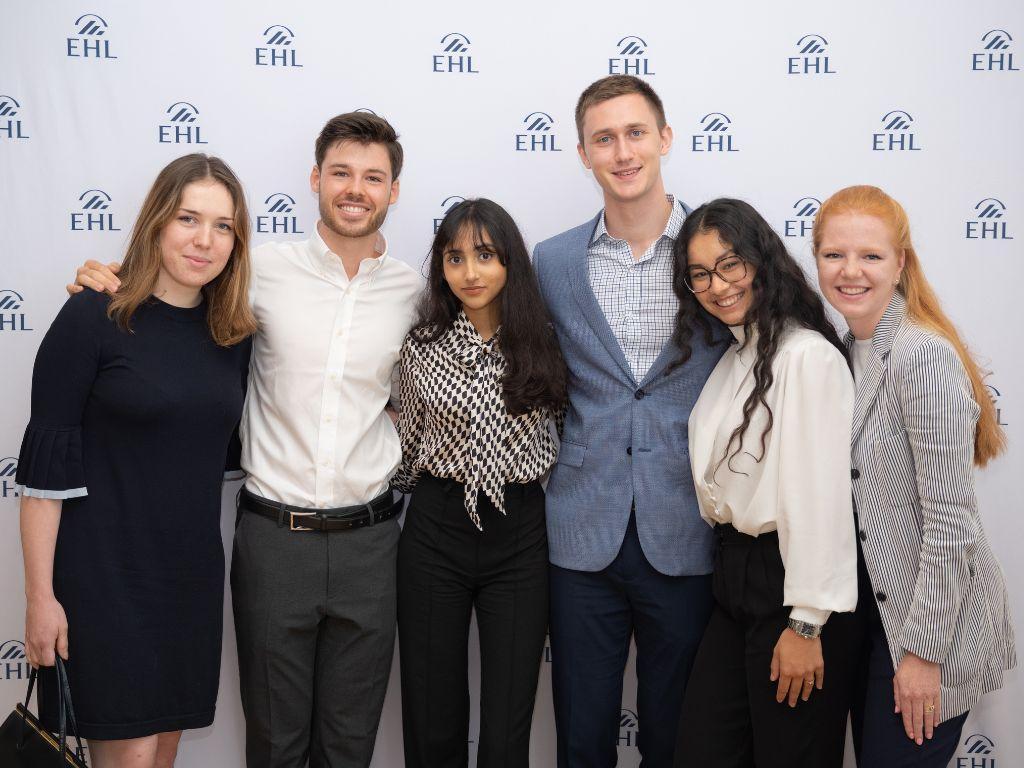
The hospitality mindset: making its mark everywhere, all at once
Myth: A hospitality education can only offer me a career working in hotels.
Truth: EHL graduates work across corporate finance, consulting, real estate, technology startups, and consumer brands worldwide.
Why do employers across sectors actively recruit from top hospitality business schools?
- Financial acumen meets human insight: Analysing P&L statements while reading customer behaviour in real-time teaches graduates to interpret both hard data and soft signals.
Who needs it? Brand managers launching products, consultants diagnosing client challenges, startup founders pivoting strategies based on market response. - Cross-cultural leadership under pressure: Leading diverse teams across language barriers when there's no time for alignment isn't theoretical diversity training, it's getting results through people who think differently.
Who values it? Investment banks, tech companies and any international organization who requires leaders to bridge cultures across global teams. - Adaptive problem-solving without a script: When a wedding reception for 200 faces a kitchen crisis 30 minutes before service, there's no manual; you solve it immediately with available resources while keeping guests satisfied.
When is it critical? Crisis management, client negotiations, managing market shifts. - Stakeholder management across competing priorities: Balancing conflicting guests, team members, suppliers, and business objectives simultaneously.
Who finds them essential? Corporate strategists, real estate developers and product managers who constantly navigate and reconcile constraints and conflicting interests.
The hospitality framework goes far beyond what many dismiss as "hotel skills". At its core, it develops fundamental business capabilities that traditional programs often overlook - how to lead when the variables are human, not just financial. In an AI-driven economy, recruiters are increasingly hiring beyond traditional business schools. They are no longer hiring just for technical knowledge, but also for adaptability, emotional intelligence, and the ability to navigate real-world complexity.
That said, this human-centric approach isn't for everyone. Students who thrive in analytical, research-intensive, or highly technical environments may build resilience and expertise through very different pathways. Ultimately, what matters most is alignment - between a student's learning style, values, and what motivates you over the long term.
For students navigating degree choices in an AI-shaped world, the more useful question may not be which job to prepare for, but which capabilities you want to develop over time, and what learning environment will enable you to truly unlock your growth potential.
As you stand at the crossroads of possibility, the question is no longer simply what you want to study, but how your choices will evolve alongside a rapidly changing world shaped by AI. Rather than fearing disruption, this is your moment to think boldly, question convention, and design an education that is as adaptable as the future itself. If this reflection has sparked new questions or even uncertainty, you are not alone - and you don't have to navigate it alone either. Join us on 19 May 2026 for our upcoming webinar, "What to Study in the Age of AI", where we'll explore hospitality business as a future-proof course, challenge traditional assumptions, and help you make more confident, future-ready decisions about your journey.
Register here
EHL is the only standalone hospitality business school with AACSB accreditation, the highest standard for business schools worldwide. With dual accreditation in the US and Europe, and students from over 125 nationalities, the degree is recognized globally.